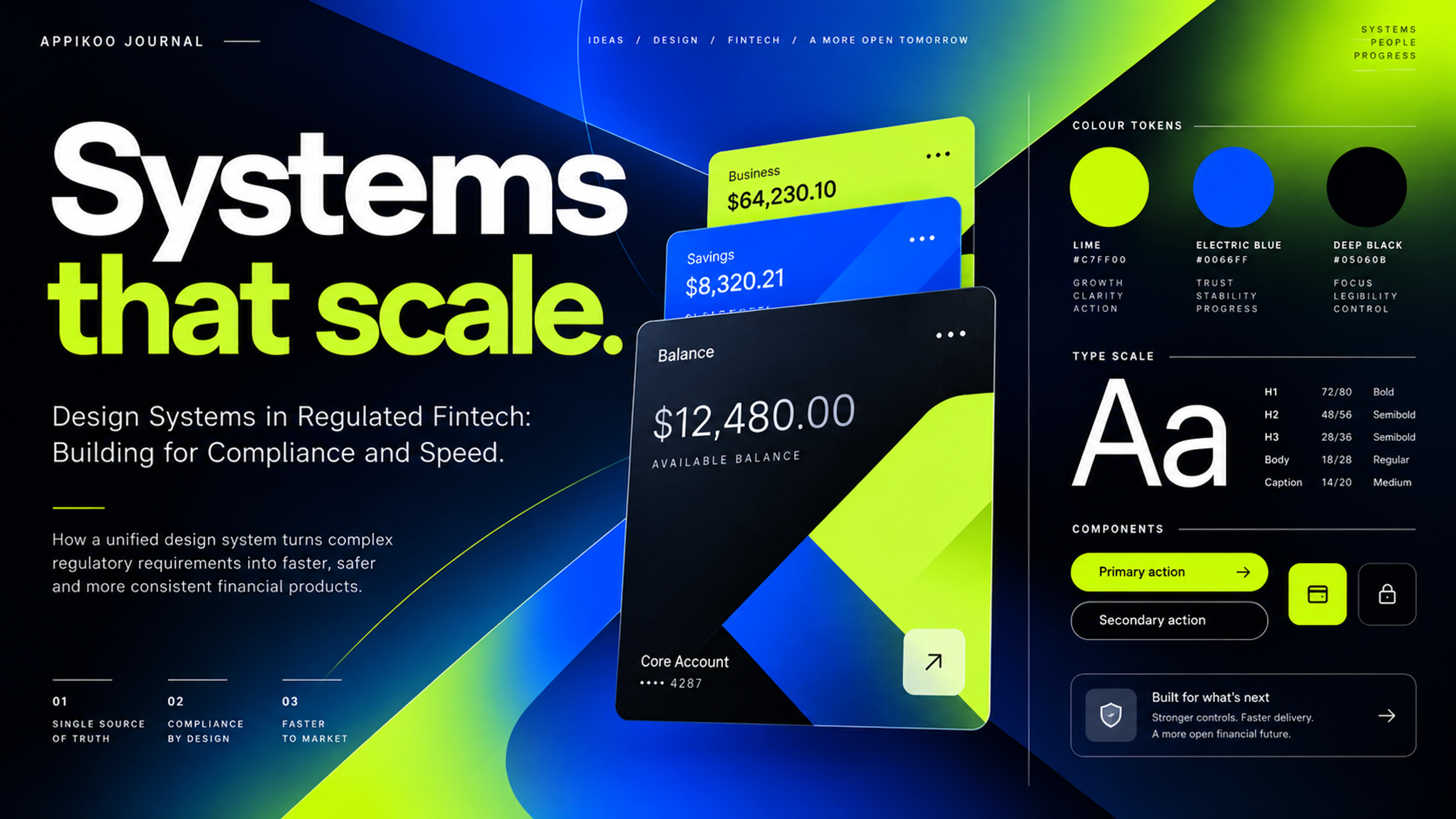
A robust design system in a regulated financial environment is not a UI kit. It is a compliance infrastructure. How elite fintech teams ship fast without cutting corners.
01.The Regulatory Surface as a Design Constraint
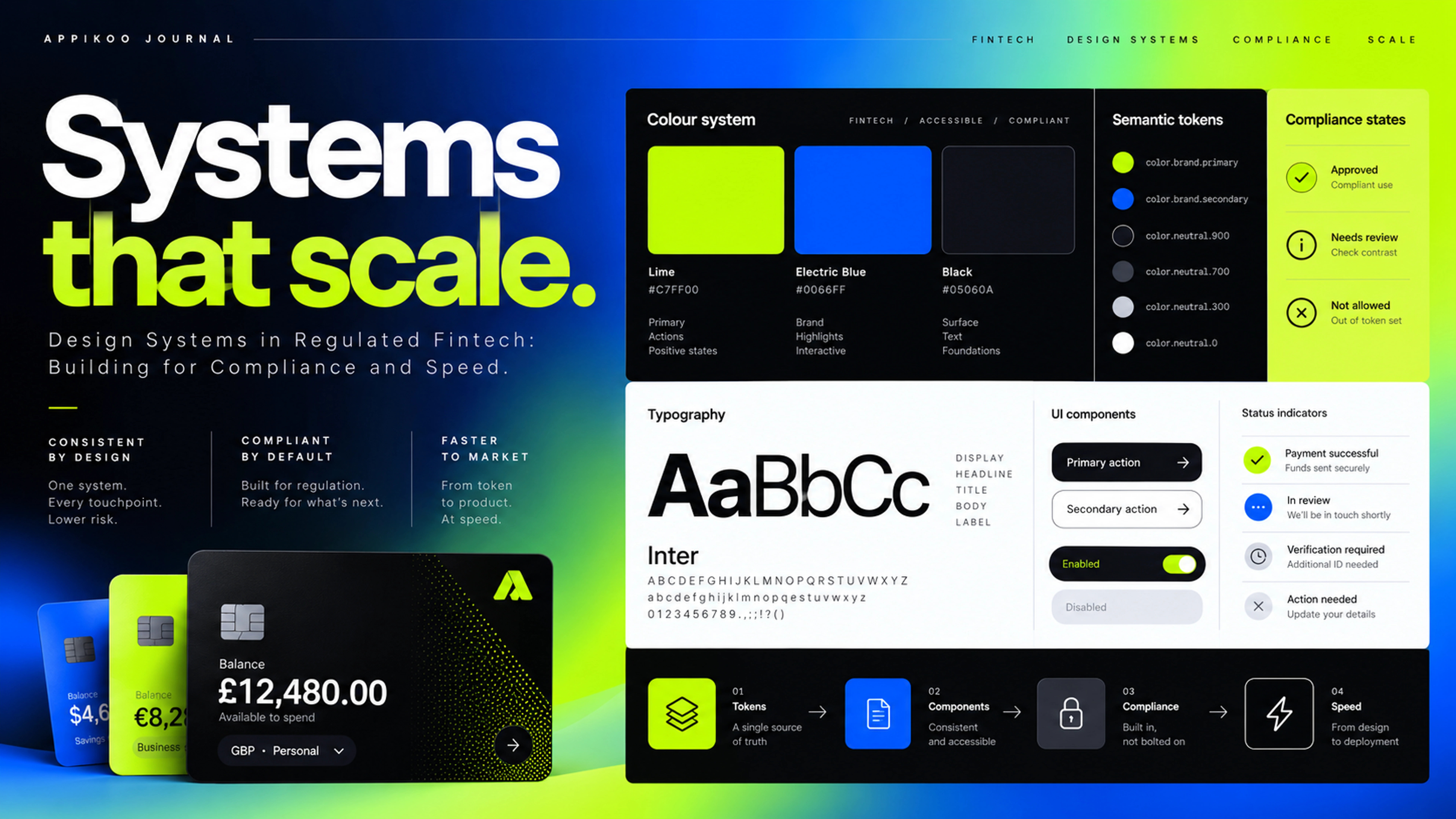
WCAG, PSD2, and GDPR do not oppose great UX. They demand it.
In financial services, every pixel carries legal weight. WCAG 2.2 AA compliance, PSD2 strong customer authentication flows, and GDPR consent architecture are not constraints bolted on after design is complete. They are foundational requirements that must be encoded into the design system's primitive token layer from day one.
Organisations that treat compliance as a QA gate discover its true cost late: entire component libraries rebuilt, brand guidelines revised, and development sprints wasted on rework. Elite fintech product teams instead build compliance requirements directly into component variants, token scales, and interaction contracts.
The result is a design system that accelerates velocity because it is pre-cleared (every component that ships from the system is already compliant by construction, not by audit).
- Colour token scales must pass WCAG AA contrast ratios at every theme variant.
- Focus management patterns must be encoded at the primitive input level, not the page level.
- Data disclosure components must be versioned to track consent architecture changes.
02.Structuring the Token Hierarchy for Scale
From primitive values to semantic decisions to component-specific overrides.
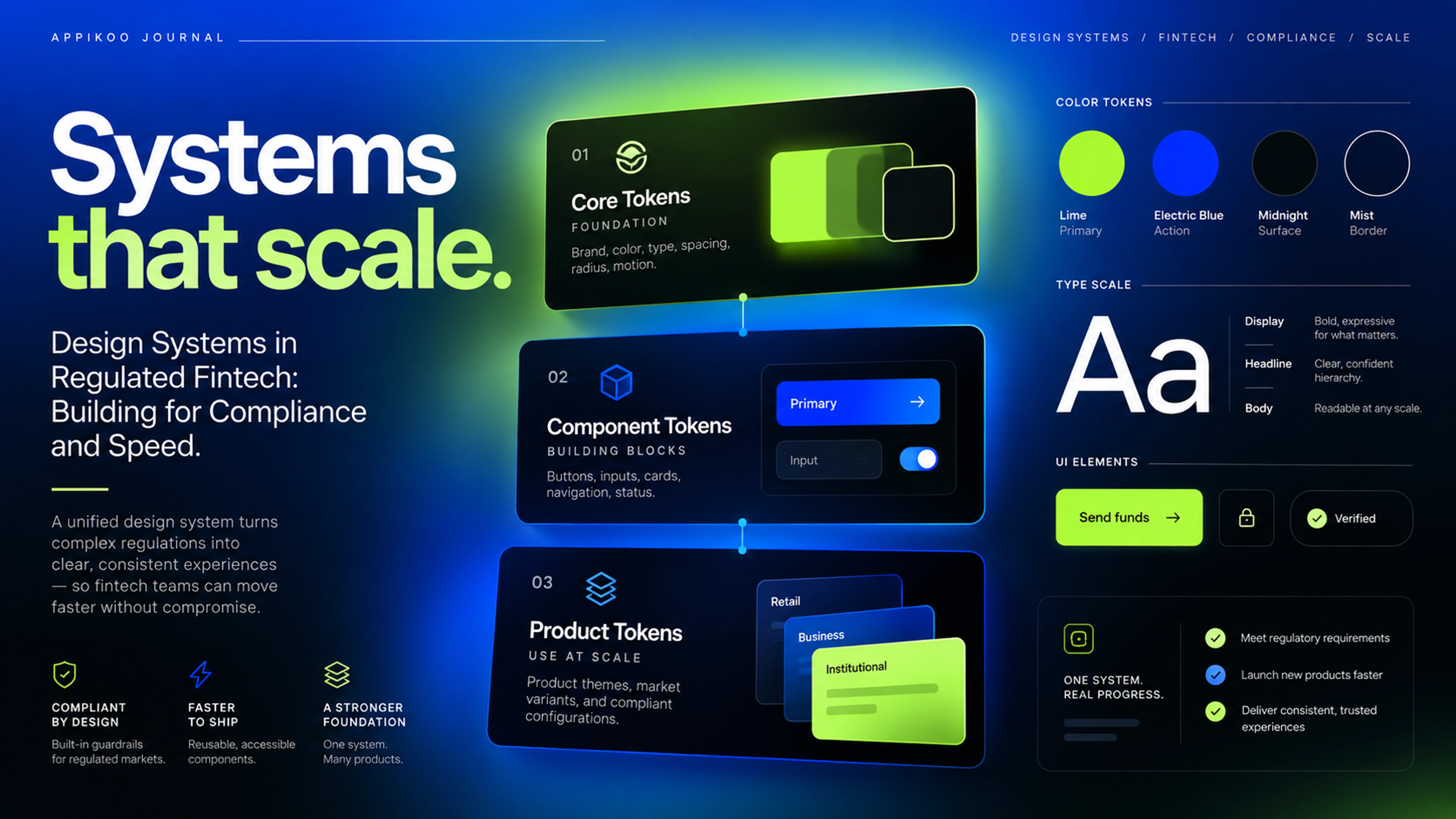
A naive design system collapses under organisational scale. When token naming conventions are arbitrary and component contracts are undocumented, design teams diverge, engineers reimplement, and the system fractures into a loosely-affiliated collection of components with no shared governance.
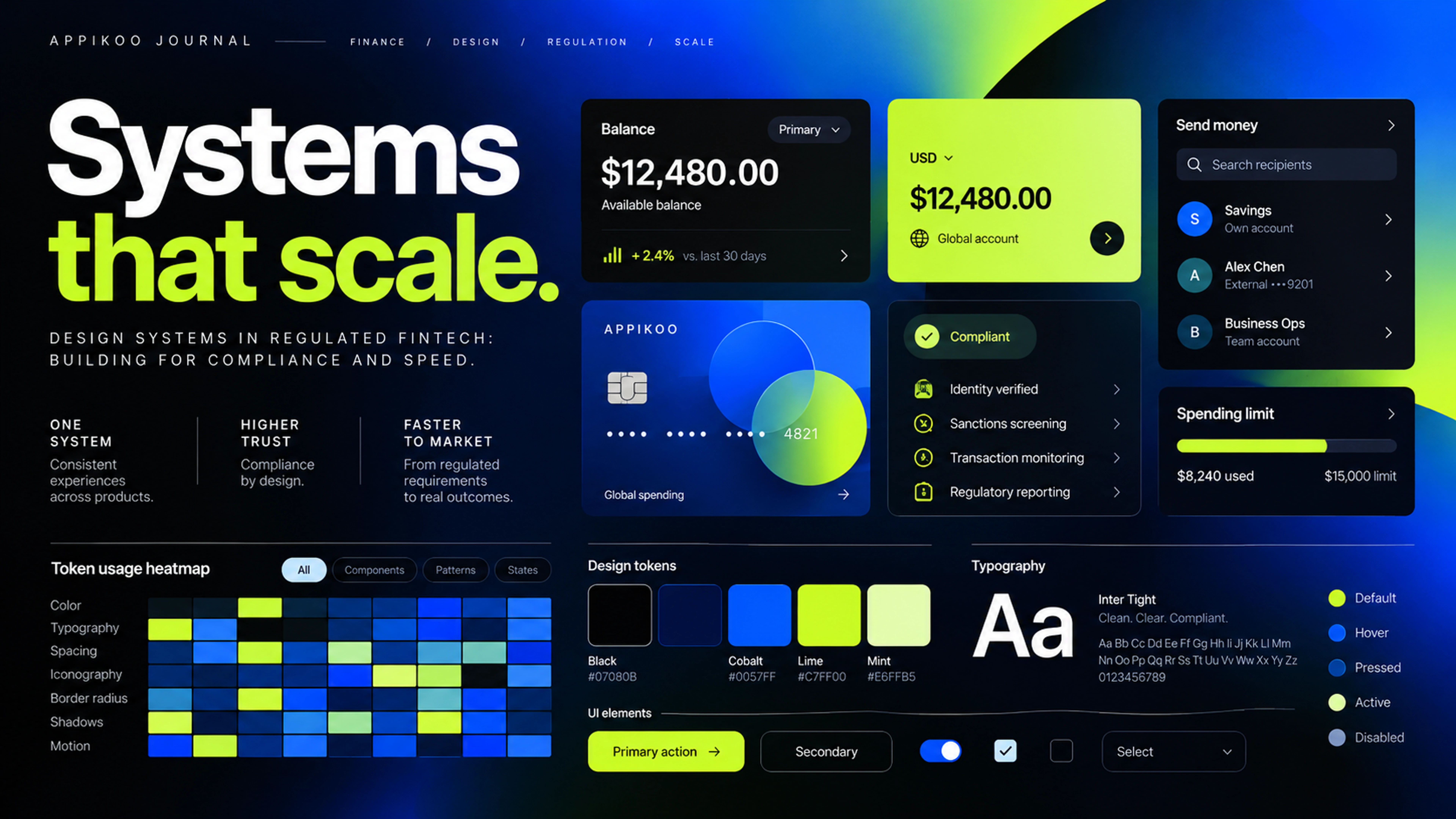
Robust fintech design systems implement a strict three-tier token model: primitive tokens define raw values (colour hex codes, type size scales, spacing unit values), semantic tokens map primitives to intent (text.primary, surface.interactive, feedback.error), and component tokens apply semantic tokens within specific component contexts.
This separation means brand retheming requires changes only at the primitive layer, compliance updates land at the semantic layer, and component-specific edge cases are handled locally without polluting the global token namespace.
"A design system's true power is measured not by the number of components it contains, but by the number of decisions it eliminates for every engineer and designer who uses it."
Appikoo Design System Principles
03.Shipping Fast Without Breaking Compliance
CI-integrated visual regression and accessibility testing at the component level.
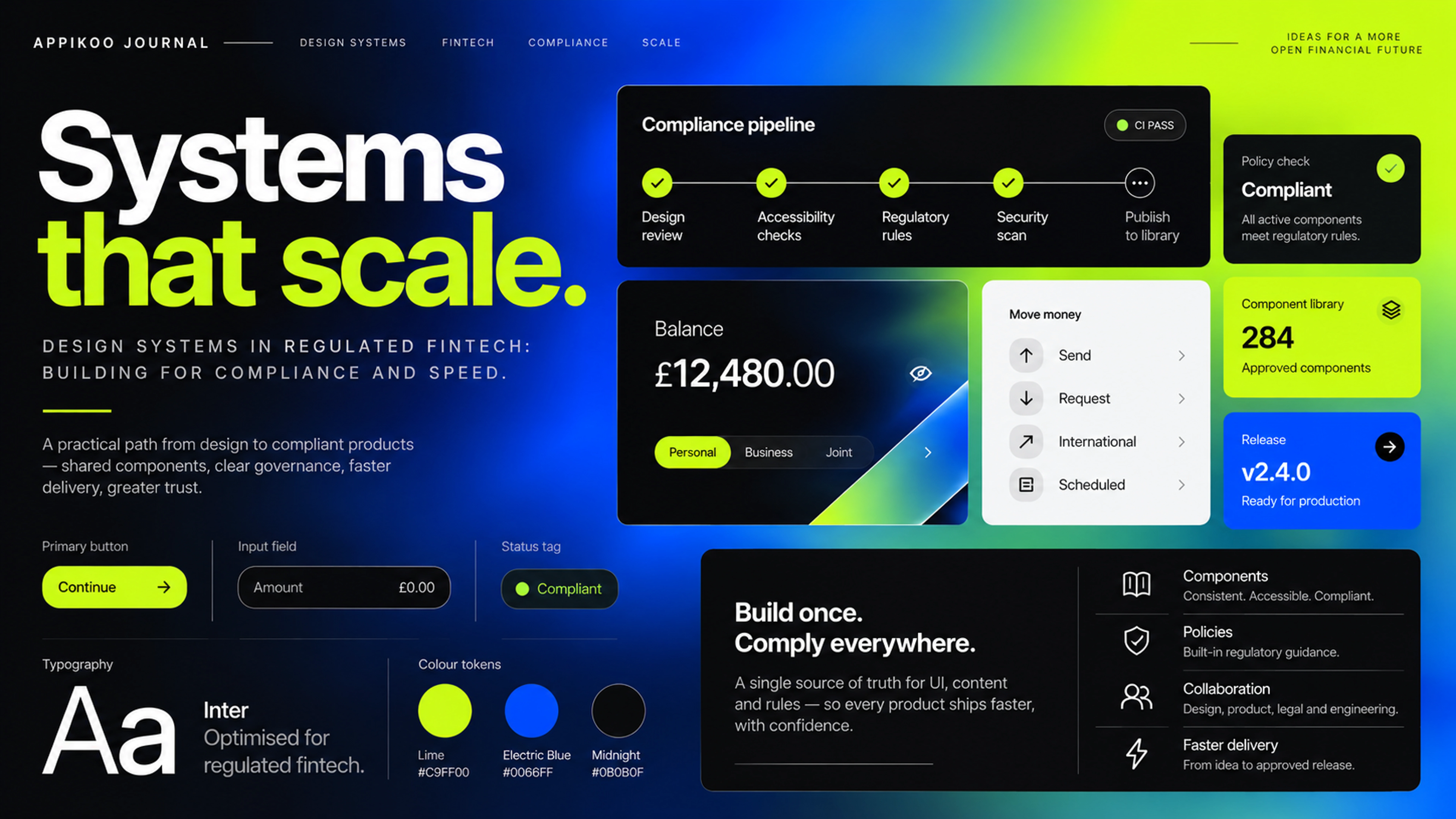
Speed in a regulated environment is not recklessness. It is automation. Elite fintech engineering teams integrate Storybook component tests, Axe accessibility validators, and Chromatic visual regression pipelines directly into the PR merge gate, blocking any component change that introduces a compliance regression.
This transforms compliance from a human-review bottleneck into a machine-enforced invariant. Teams ship faster because they carry less fear (the system itself enforces the rules that previously required manual oversight from legal and accessibility consultants).
04.Compliance as Competitive Advantage
Regulated industries are won by organisations that treat constraints as design briefs. Every accessibility requirement, every data disclosure mandate, every authentication flow standard is an opportunity to build trust infrastructure that competitors who cut corners cannot replicate.
The fintech teams that invest in robust, compliance-native design systems today will compound that investment as regulatory requirements tighten globally because their system evolves with the rules, while their competitors restart from scratch.