A durable platform does not need every future feature today. It needs clear boundaries, portable information and a disciplined way to decide what should change next.
01.Plan for change without predicting everything
Technology roadmaps often become lists of fashionable capabilities. Begin instead with the changes your organization is likely to face: new services, another language, a different sales process or additional partners. These are concrete design constraints that can guide the initial structure.
Separate confirmed requirements from possibilities. Deliver the confirmed journey well, then preserve reasonable extension points for the rest. Every unused feature still creates decisions, maintenance and opportunities for confusion, even if its first implementation looks inexpensive.
02.Keep content and data portable
Store content in meaningful fields rather than coupling it entirely to a particular page layout. A service description, image and contact action should remain understandable when the design changes. The same principle applies to customer records and operational events.
Before adopting a tool, inspect export formats, integration boundaries and account ownership. Reversibility is not free, but it can be planned. Keep an inventory of what would need to move if the organization changed provider or brought maintenance in-house.
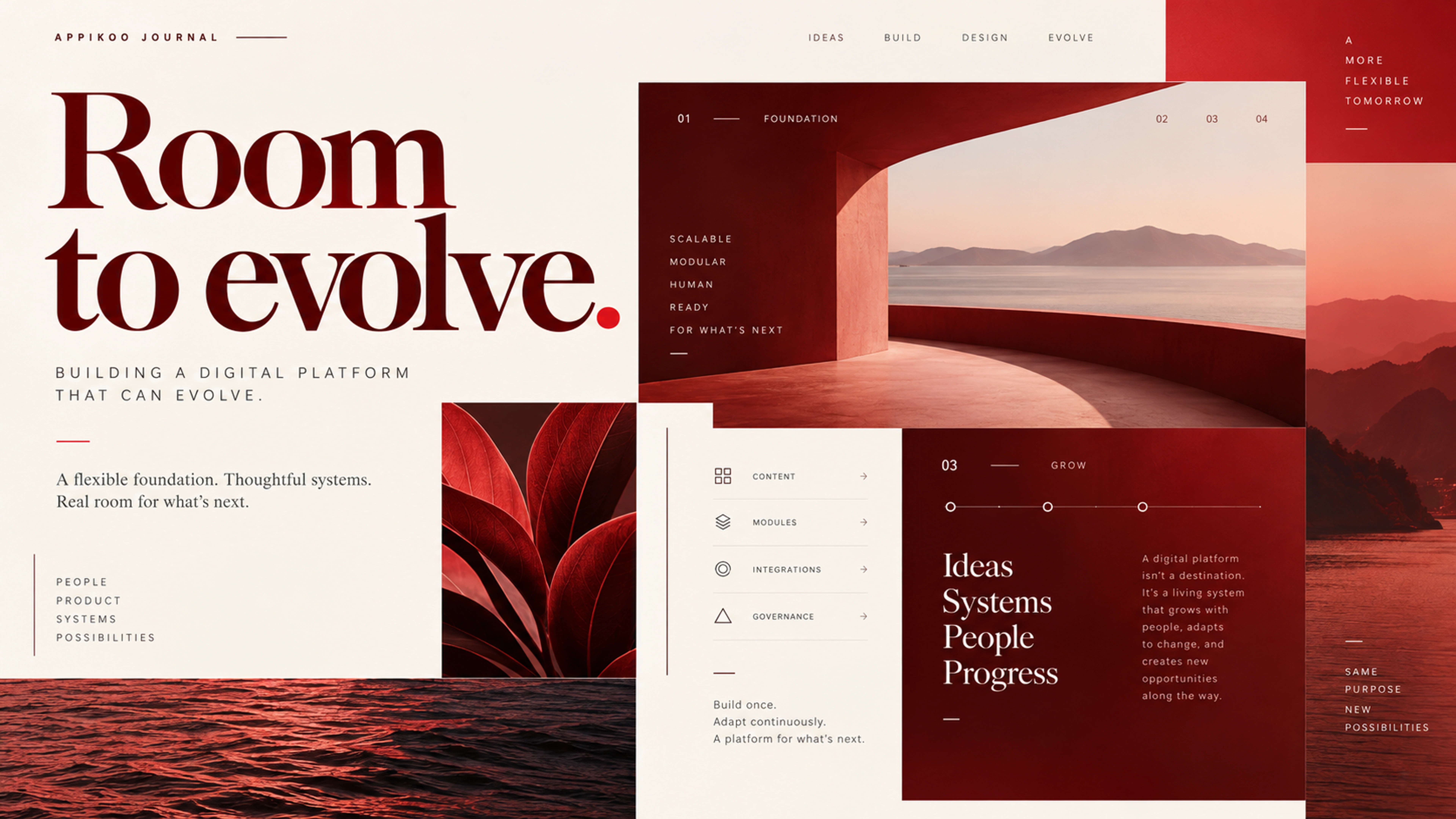
03.Measure friction before adding capability
Support questions, abandoned tasks and repeated manual work reveal where evolution may help. Review a small set of signals regularly instead of collecting dashboards that no one uses. Pair quantitative observations with conversations that explain the context behind them.
Treat automation as a workflow decision. Define the trigger, the permitted action and the person who reviews exceptions. If an automated suggestion can be wrong, show how it can be checked and corrected before it affects an important record.
04.Create a repeatable evolution cycle
Choose one problem, define the expected improvement and release a limited change. Observe its effect before expanding it. A durable platform grows through understandable decisions and maintained interfaces, not through the accumulation of features whose purpose has been forgotten.
- Separate immediate needs from future options.
- Check exports and ownership before committing.
- Review each release against a defined user problem.