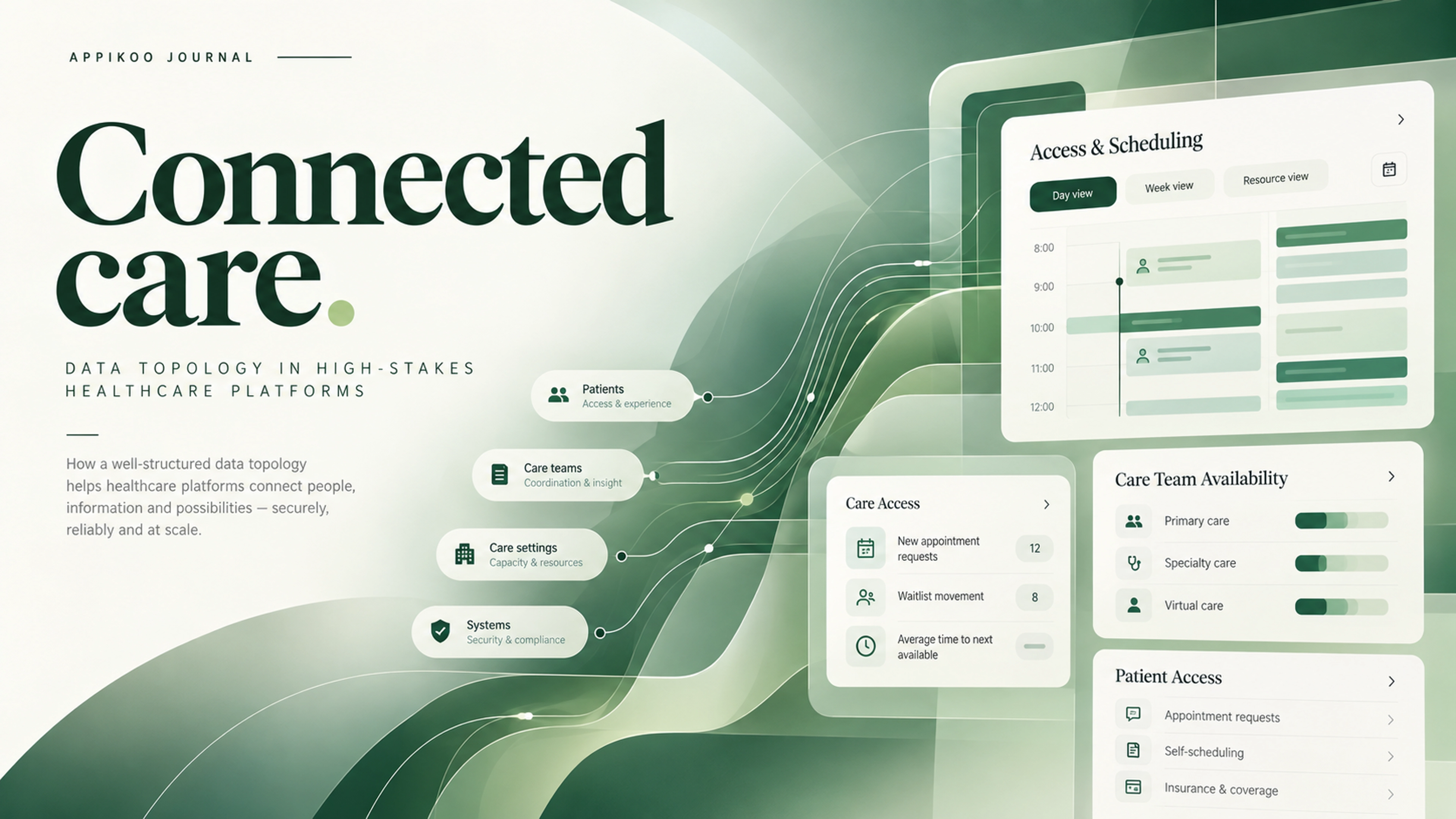
In clinical systems, data architecture is patient safety infrastructure. How to build fault-tolerant, HIPAA-compliant data flows that clinicians can trust under pressure.
01.When Data Architecture Is a Patient Safety Issue
Understanding the operational and regulatory topology of clinical data environments.
Healthcare data systems operate in a fundamentally different risk domain than commercial software. A rendering lag in an e-commerce checkout is a revenue event. A data synchronisation failure in a clinical decision support system is a patient safety event. This distinction must be the foundational axiom of every architectural decision in healthcare platform engineering.
HIPAA technical safeguards mandate encryption at rest and in transit, audit logging of every data access event, and automatic session termination after inactivity thresholds. But compliance is the floor, not the ceiling. Elite clinical platforms build far beyond the regulatory minimum: they architect for the chaos of real clinical environments (intermittent hospital Wi-Fi, concurrent multi-user record access, and the cognitive load of clinicians working under acute pressure).
- All PHI must be encrypted with AES-256 at rest and TLS 1.3 in transit. No exceptions, no legacy protocol fallbacks.
- Audit logs must be append-only, tamper-evident, and replicated to a separate availability zone.
- Session tokens must auto-rotate on privilege escalation and expire on configurable inactivity windows.
02.HL7 FHIR as the Canonical Data Contract
Structuring interoperability without sacrificing performance or auditability.
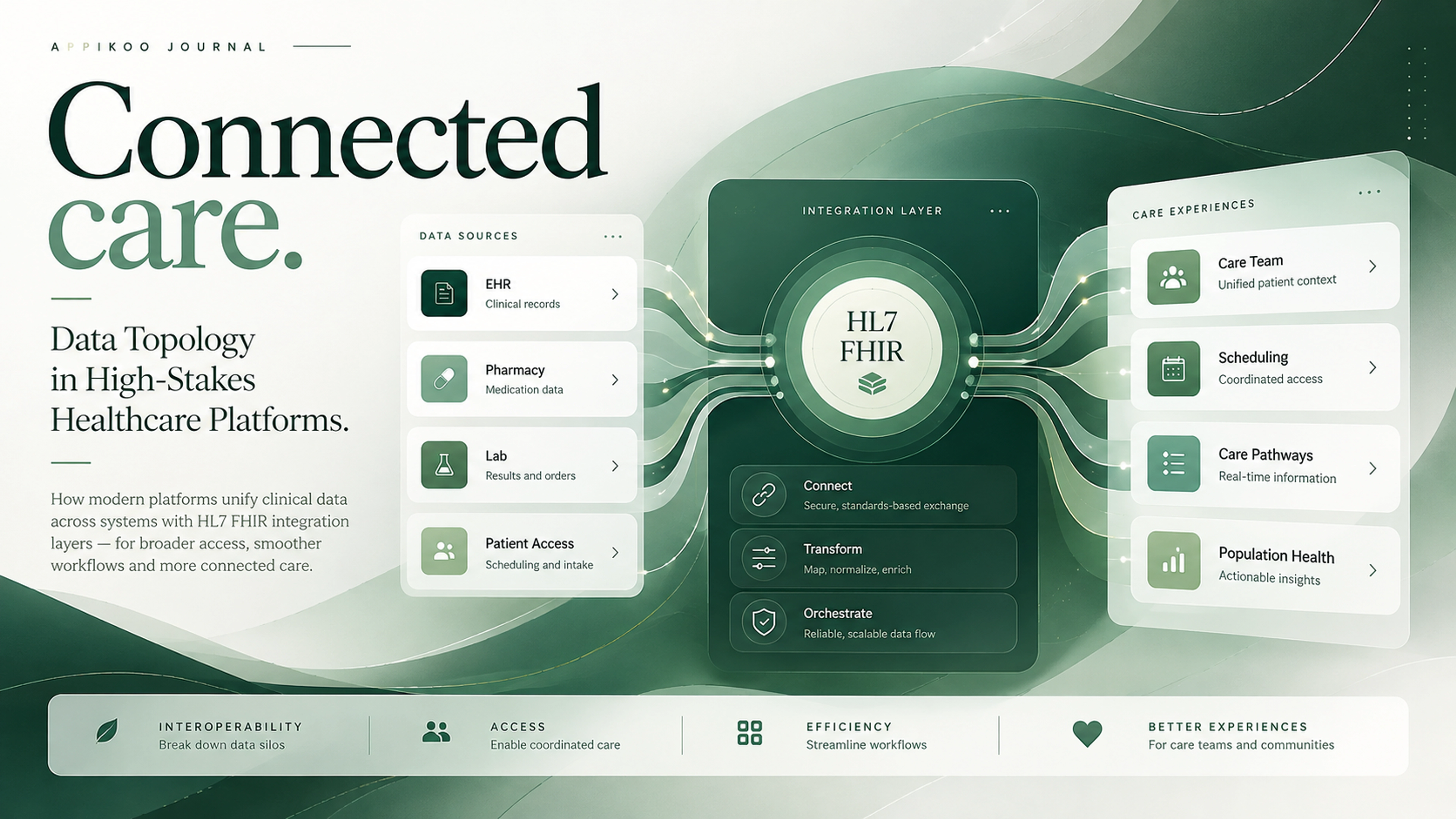
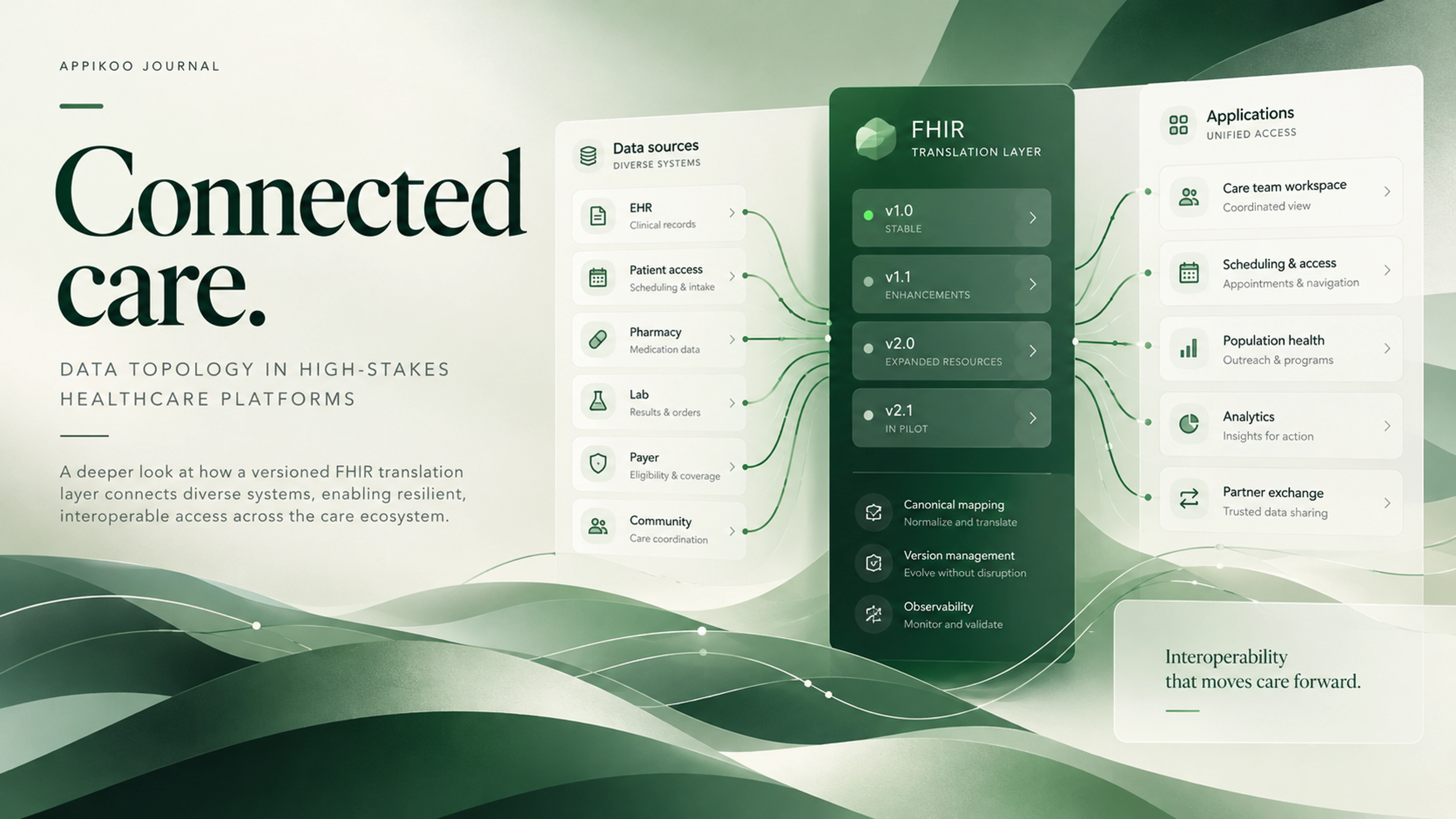
The HL7 FHIR R4 standard provides the interoperability skeleton for modern healthcare data architecture. But FHIR compliance is not a binary. It is a spectrum of conformance profiles, and the architectural decisions made within that spectrum determine whether the platform is interoperable in theory or interoperable in practice.
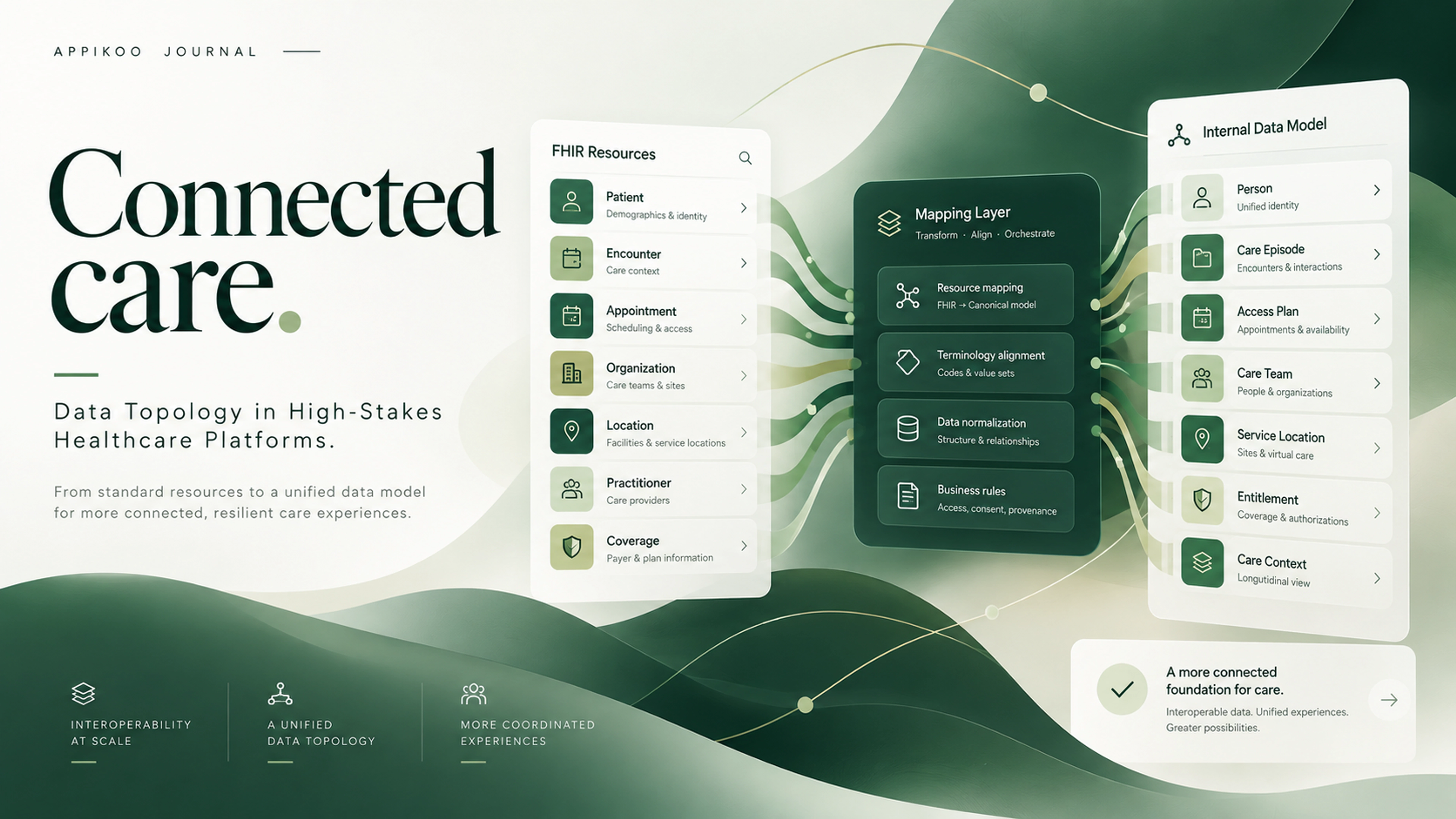
High-performance clinical platforms implement FHIR resources as the canonical data contract at the API boundary while maintaining a denormalised, query-optimised internal representation for high-throughput clinical workflow screens. The translation layer between internal representation and FHIR output is explicit, tested, and versioned independently of both layers.
This dual-layer approach allows the internal data model to evolve for performance without breaking downstream FHIR consumers (a critical capability when integrating with hospital EHR systems that move on decade-long update cycles).
"FHIR compliance means nothing if the system that implements it cannot sustain a 200-concurrent-user ward round without degrading to the point where clinicians abandon the tool and revert to paper."
Appikoo Clinical Systems Design Principles
03.Offline-First Architecture for Clinical Continuity
Building systems that function under network degradation without compromising data integrity.
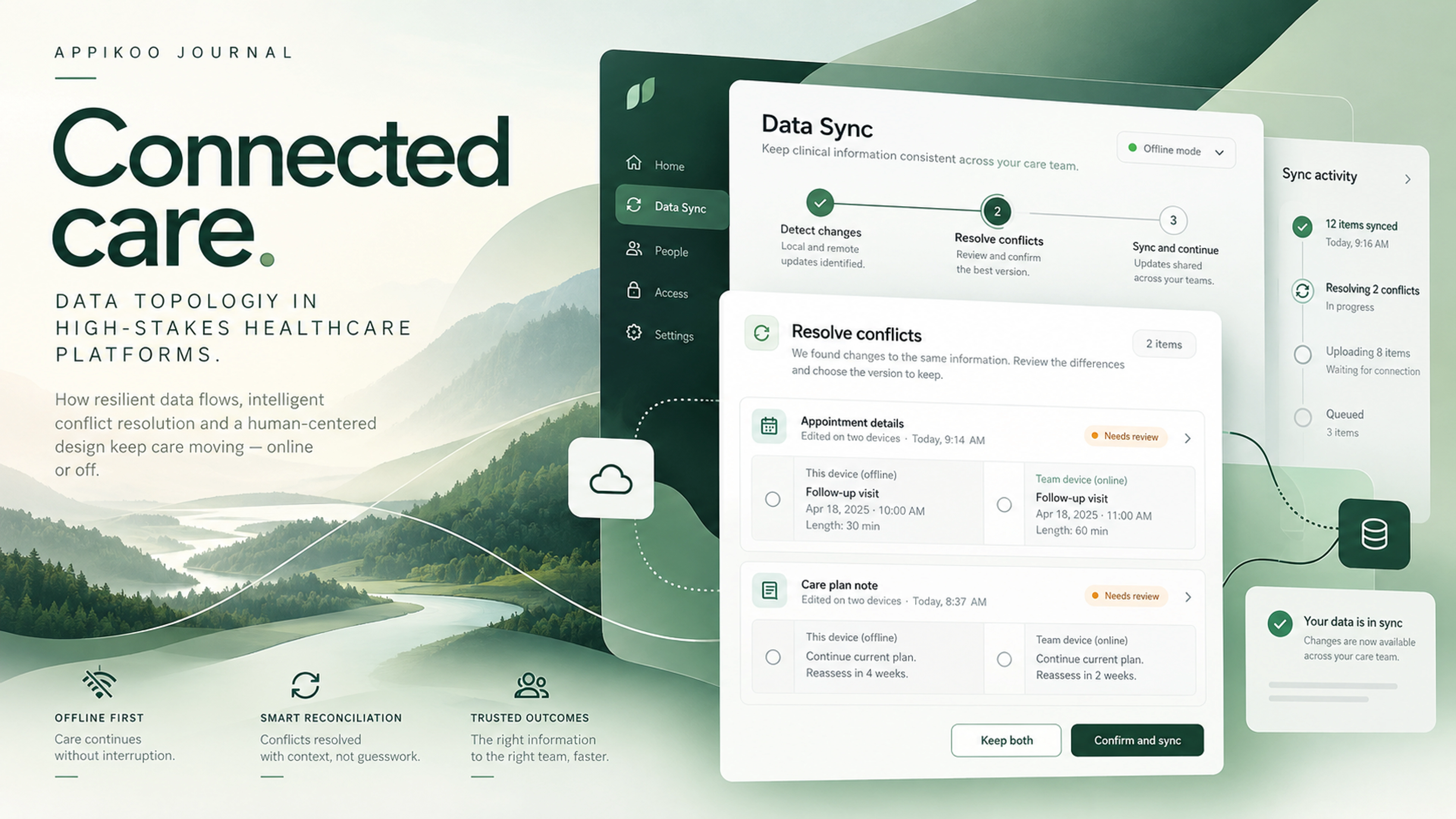
Hospital networks are not data centre networks. Wi-Fi dead zones, network infrastructure failures during high-patient-acuity events, and the physical reality of clinicians moving between wards with tablets disconnected from the network are engineering constraints that must be designed for explicitly, not discovered in production.
Offline-first clinical architectures use service worker-based local data caches with conflict resolution strategies that are medically safe by design: read operations succeed offline against the cached state, write operations are queued to a local mutation log, and synchronisation on reconnection uses last-write-wins only for non-clinical-decision fields, flagging conflicts in clinical decision fields for explicit clinician review.
04.Trust Is the Specification
In healthcare, the ultimate product requirement is trust. Clinicians must trust that the data they see is current. Patients must trust that their records are private. Administrators must trust that the audit trail is complete. Every architectural decision must be evaluated against these three trust invariants, not against engineering convenience or delivery velocity.
The platforms that earn and sustain that trust are the ones that treat their architecture as a direct extension of their clinical duty of care. That is not a metaphor. It is a design principle.