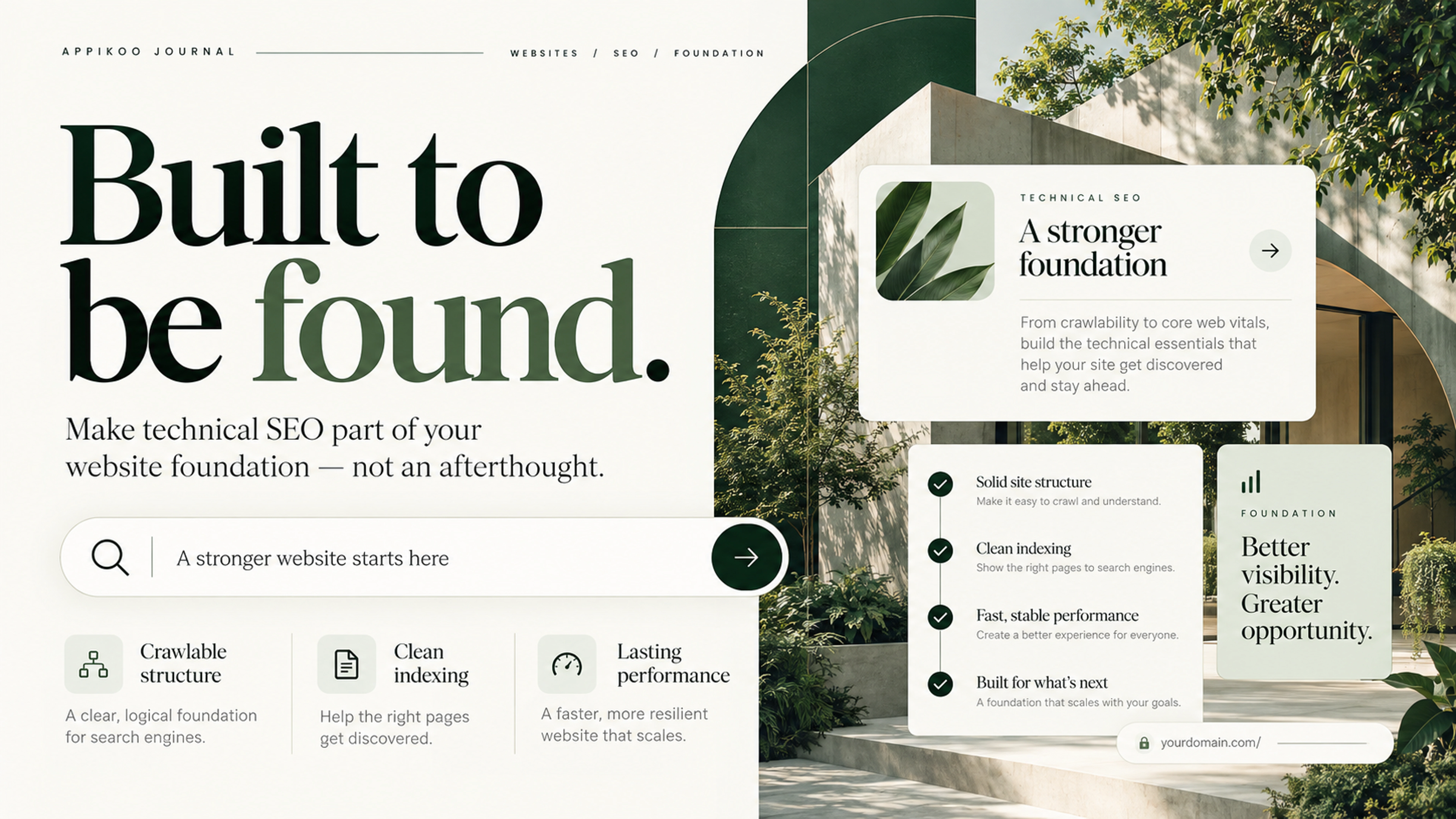
Search visibility begins with pages that can be found, understood and maintained. Establish clear structure and useful content before treating SEO as a collection of last-minute metadata fixes.
01.Give each page a distinct purpose
Map the questions your audience asks to useful pages. A service page should explain a service; a journal article can explore a narrower decision. Creating several nearly identical pages for slightly different phrases makes the content harder to maintain and less helpful to readers.
Use descriptive titles, headings and internal links. The navigation should expose important pages through a structure people can understand. A page that exists only behind an unexplained interaction is harder to discover and harder to include in a coherent editorial journey.
02.Check what is actually accessible
Inspect the published response, not just the editor preview. Confirm that important content and links are available, that intended public pages return the correct status and that private or draft material is not accidentally exposed. Check both language versions when the site is multilingual.
Review canonical URLs, language alternates and the sitemap as one system. These signals should agree with the routes that actually exist. A sitemap is useful for discovery, but it does not guarantee indexing or replace clear internal navigation.
03.Prepare changes before a redesign
Inventory existing URLs before changing the site structure. Map useful old pages to their new destinations and review redirects individually. Sending every removed page to the homepage often creates an unhelpful experience for someone looking for a specific subject.
Carry across accurate metadata and meaningful content, then test links from external references and internal navigation. Keep the migration list available after launch so that a missing page can be investigated without guessing what used to exist.
04.Maintain discoverability over time
Review broken links, obsolete content and search diagnostics as part of normal maintenance. Update articles when their advice changes and distinguish editorial improvements from technical repairs. Search-friendly implementation supports useful content; it cannot guarantee a ranking position for an irrelevant page.