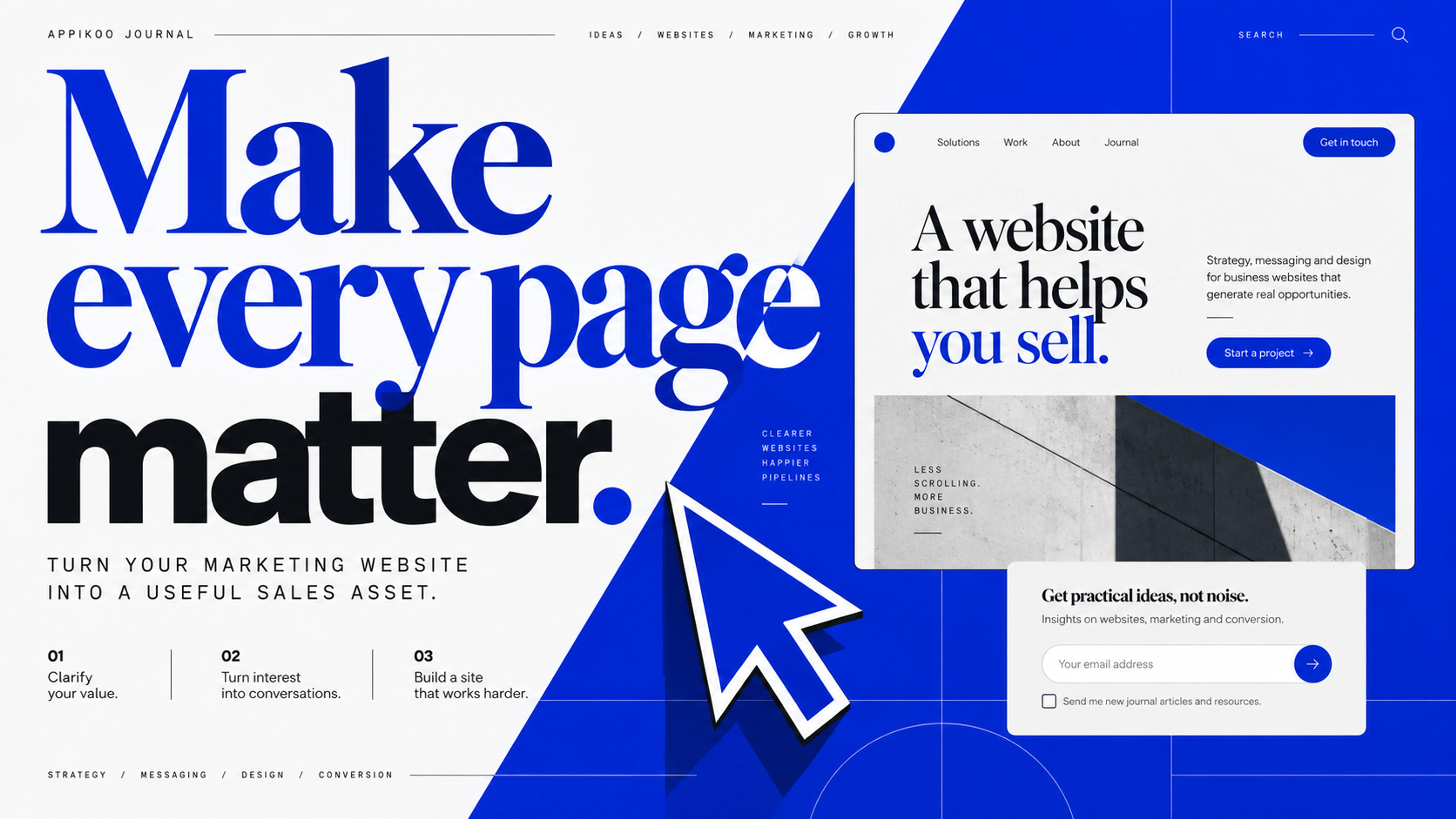
A website supports sales when it answers the right questions, demonstrates relevant work and makes the next conversation easy to start. That requires an operating process as much as a visual identity.
01.Start with the conversation your buyer needs
List the questions asked before a prospect agrees to a meeting. They may concern scope, timing, collaboration or suitability for a particular business. Organize the site around these decisions instead of describing the company through internal departments.
A service page should let someone recognize their situation, understand the proposed approach and see what happens next. A striking opening image can attract attention, but it cannot replace a clear explanation of who the service is for and what it includes.
02.Use evidence that matches the decision
Show work that demonstrates a relevant capability. Explain the original constraint, your contribution and what was delivered. If a project is a concept, identify it as such. Never turn a decorative dashboard or invented percentage into evidence of client results.
A useful case study helps the reader compare their own situation with the project. Include the decisions that shaped the work, not just polished screens. When outcomes cannot be measured reliably, describe the delivered capability and its limits rather than implying commercial impact.
03.Make the handover to sales explicit
Choose an action that reflects the visitor’s level of commitment. A discovery call, a brief submission and a pricing request are different promises. Explain what information is needed, who will respond and what the visitor should expect after sending the form.
Test the complete handover: submission, confirmation, notification and assignment. A form that displays success while the request never reaches its owner is a broken sales process. Keep a recoverable record and a clear route for enquiries that need manual attention.
04.Maintain it as a working asset
Review the site with the sales team regularly. Update outdated offers and use repeated prospect questions to improve page content. Measure qualified conversations and successful handovers alongside visits. Traffic is context; a useful next conversation is closer to the business outcome.