The same information can clarify an offer or overwhelm a visitor depending on its order. Build a sequence that follows the reader’s questions, then use design to make that sequence visible.
01.Name the starting point
A visitor arriving from a recommendation already has some context; a visitor from an unfamiliar advertisement may have none. Write down what the reader probably knows and what they still need to understand. Avoid opening with internal terminology that requires another explanation.
The first message should establish relevance. State the situation you address and the outcome you help create without promising results you cannot substantiate. A specific description usually helps the right reader more than an ambitious claim that could describe any company.
02.Answer the next question, not every question
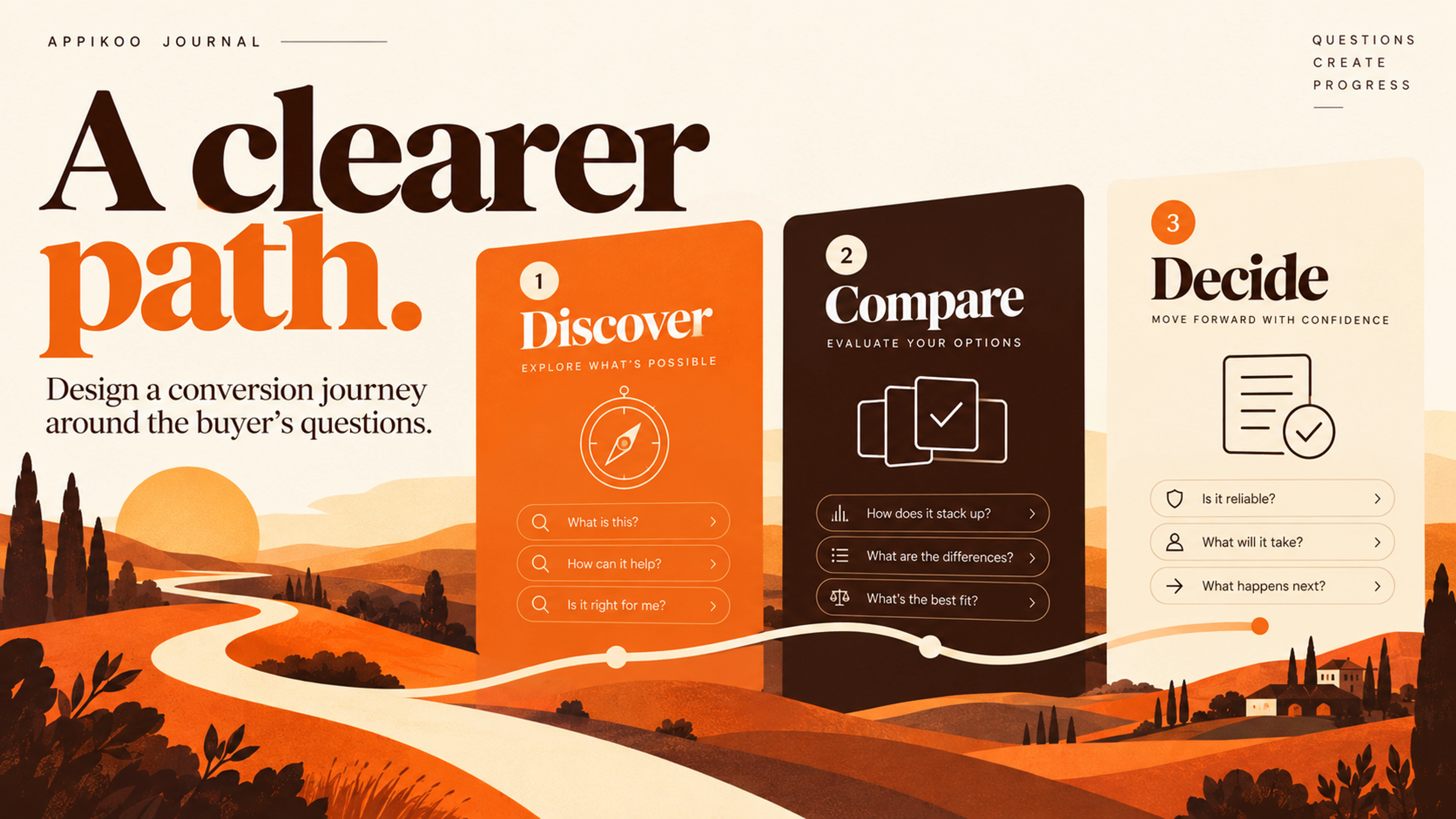
After relevance comes explanation: how does the offer work, what is included and what distinguishes it? Group supporting details under these questions. Dense paragraphs often indicate that several different decisions have been placed in the same section.
An imagined example makes the sequence tangible. A maintenance offer might move from recurring operational problems to the service scope, then response arrangements and the enquiry process. A reader looking for support should not have to pass through the company’s entire history first.
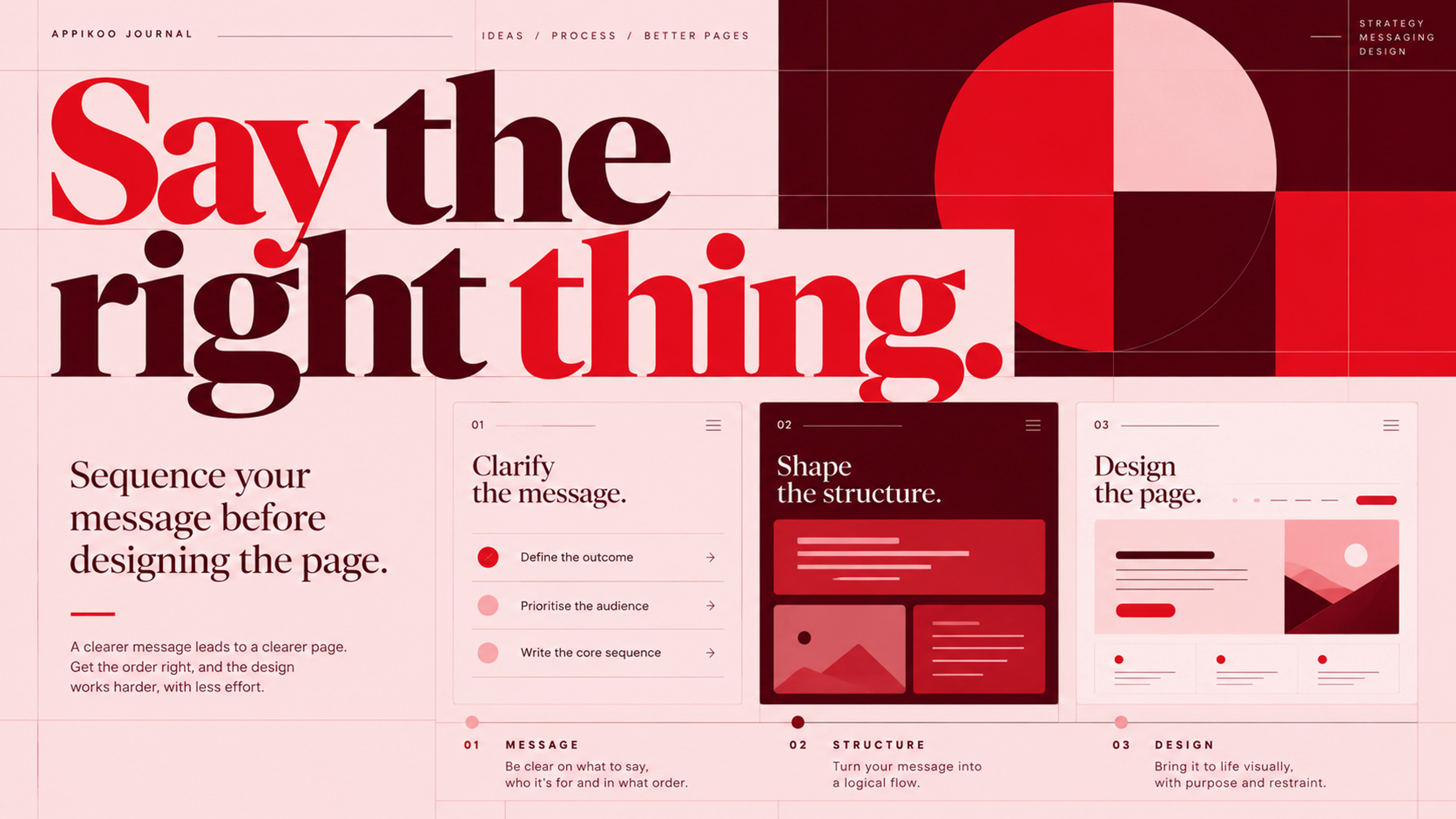
03.Place proof where doubt appears
Match examples, demonstrations and explanations to specific statements. A screenshot shows an interface, not automatically its effectiveness. A testimonial should be genuine and relevant. Where evidence is unavailable, explain the proposed method instead of dressing an assumption as a result.
Keep important qualifications visible. Hiding an exclusion or prerequisite until after someone submits a form may increase initial clicks while damaging the following conversation. Good sequencing helps people decide whether the offer fits them, including when it does not.
04.Review the page as a short conversation
Read only the headings and action labels. They should form an understandable argument. Then ask someone unfamiliar with the project to explain the offer and the next step. Revise the confusing passage before polishing typography or adding another section.