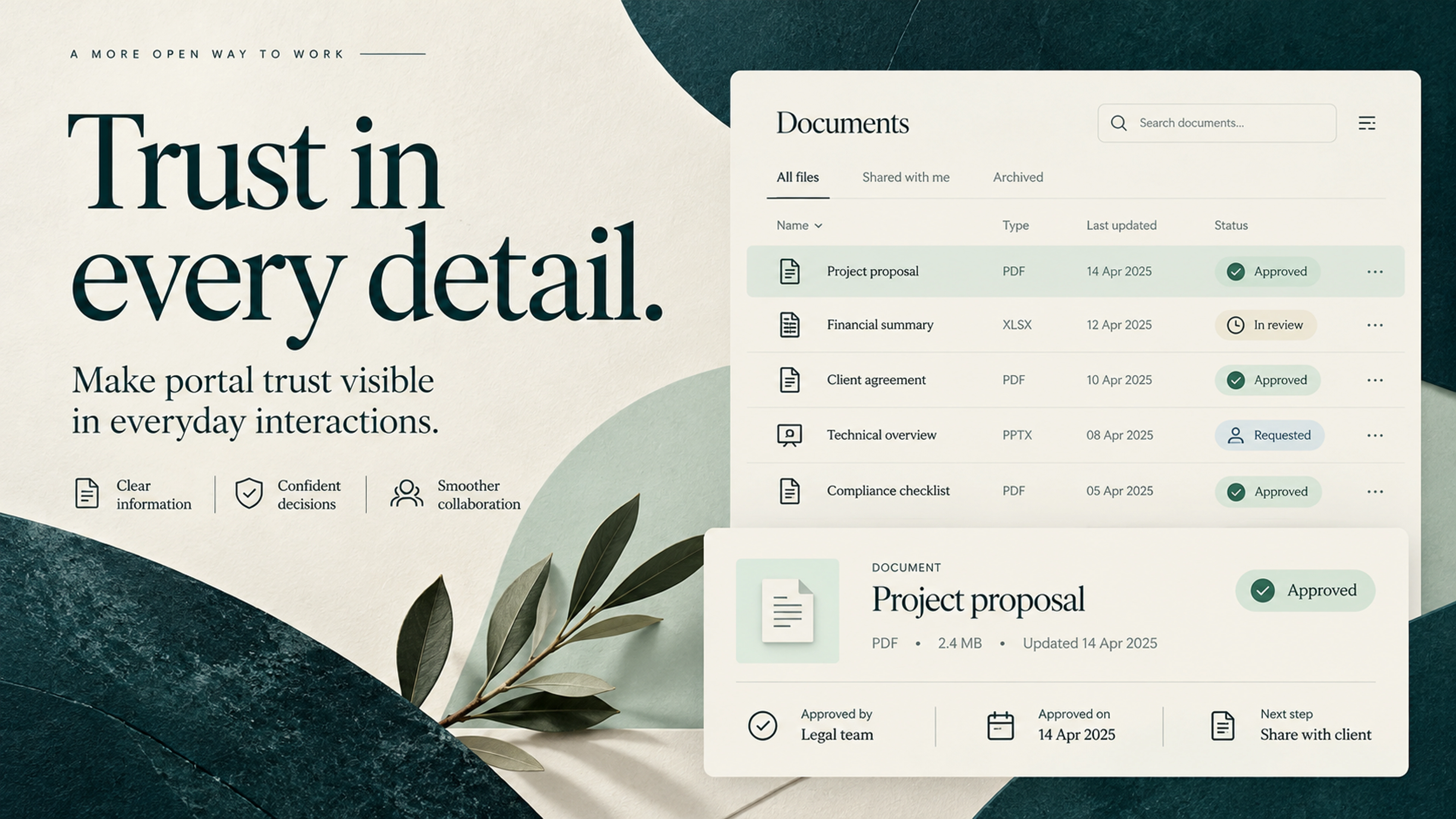
Roles are only the beginning: access also depends on the organization, the resource, and the requested action.
01.Model the relationship before the role
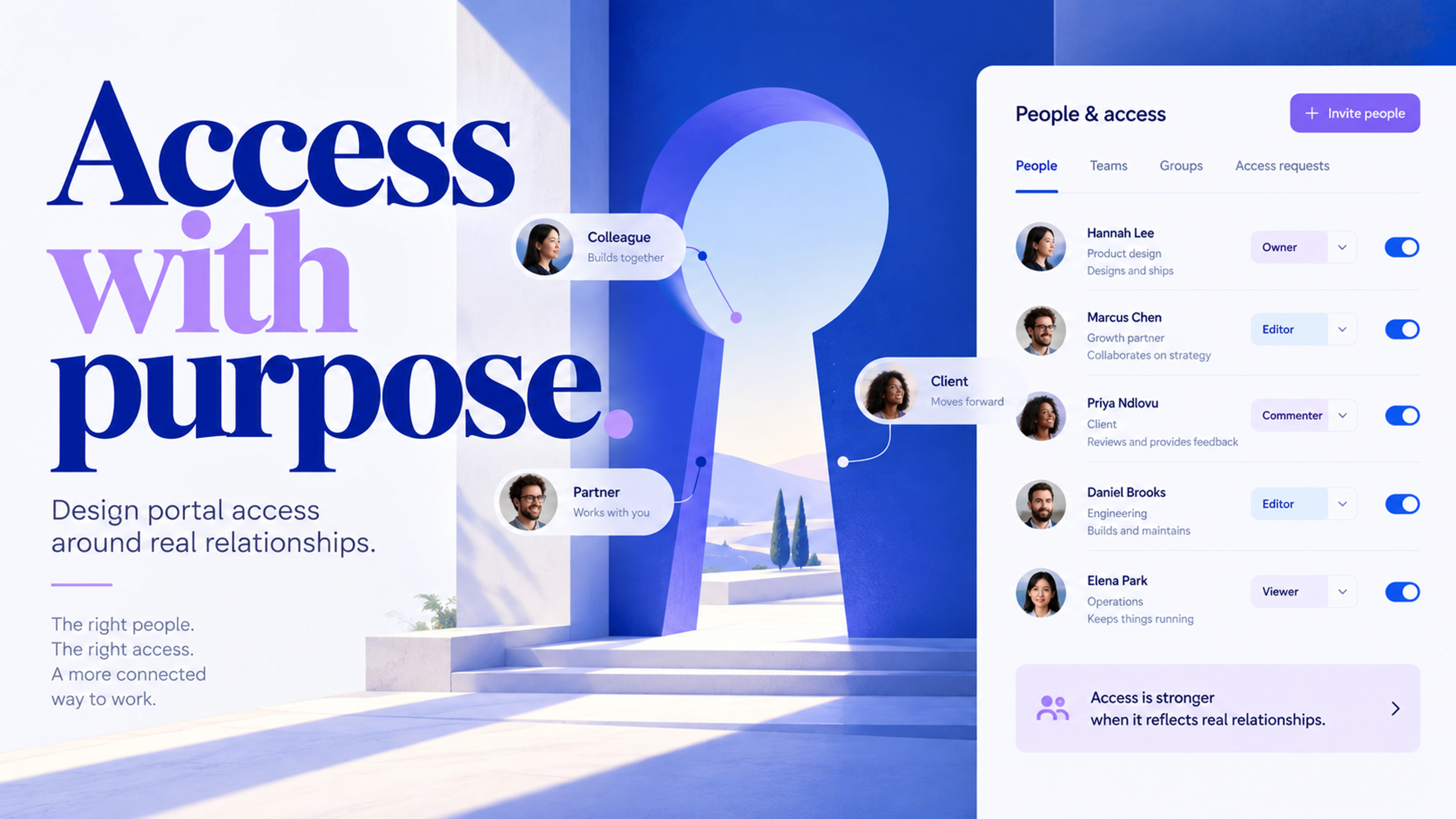
A partner may work with several client organizations while a client employee belongs to only one. A reviewer may need access to one document without seeing every commercial record. Capture these relationships explicitly instead of collecting exceptions under a broad administrator role.
Write an access matrix around real tasks: view a project, invite a colleague, approve a file, export invoices. Separate reading, changing, and delegating access because they carry different consequences.
02.Enforce the decision on the server
OWASP recommends denying access by default and checking permission on every request. A hidden navigation item is a usability choice, not an authorization control. The server must verify the user's relationship to the requested resource, including its organization boundary.
Apply the same reasoning to downloads, search results, exports, background jobs, and live subscriptions. Review direct links as carefully as the visible interface.
03.Treat membership as a lifecycle
Define who can invite someone, how invitations expire, and what happens when a person changes employer or leaves a project. Revocation must affect future access even if the browser still displays an old screen or a background operation was already queued.
Keep a reviewable history of sensitive membership changes. Restrict access to it and avoid unnecessary personal information in operational logs.
04.Test the boundaries explicitly
Use two organizations and several permission levels. Attempt to read, modify, and export a resource from the wrong organization, then repeat after revoking membership. Include direct API calls rather than only clicking through screens. Access design is complete when forbidden paths are checked as deliberately as allowed ones.