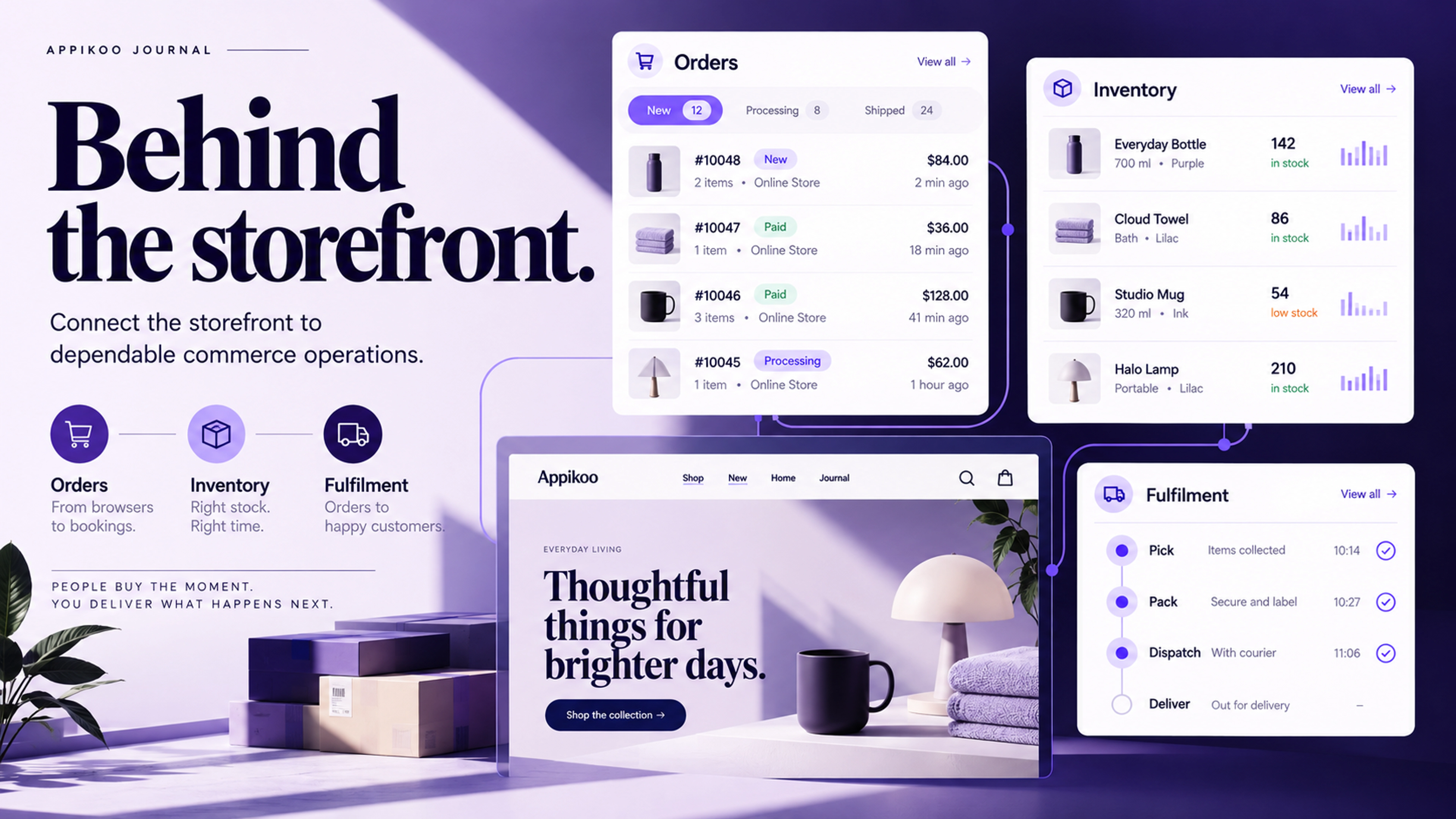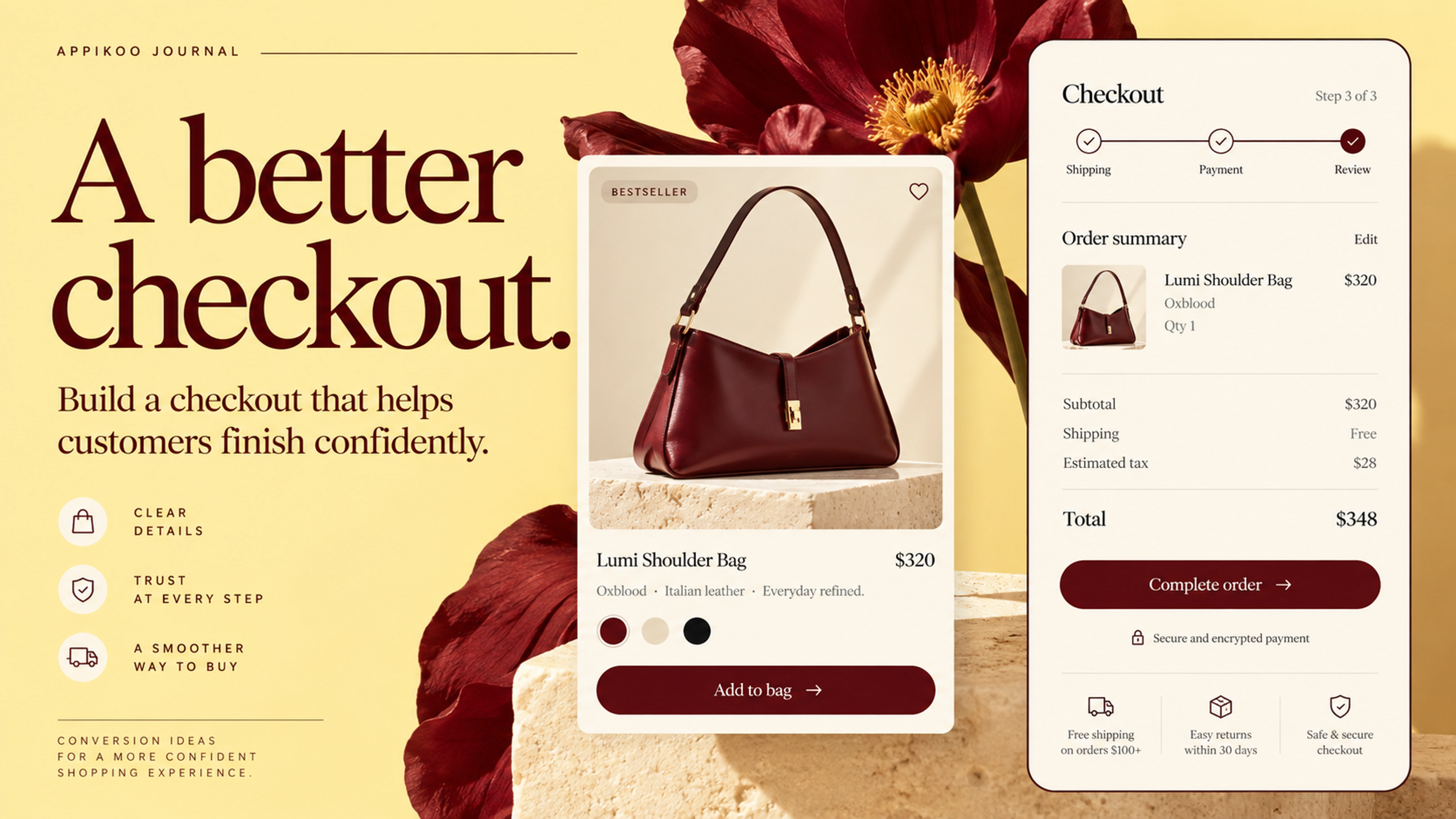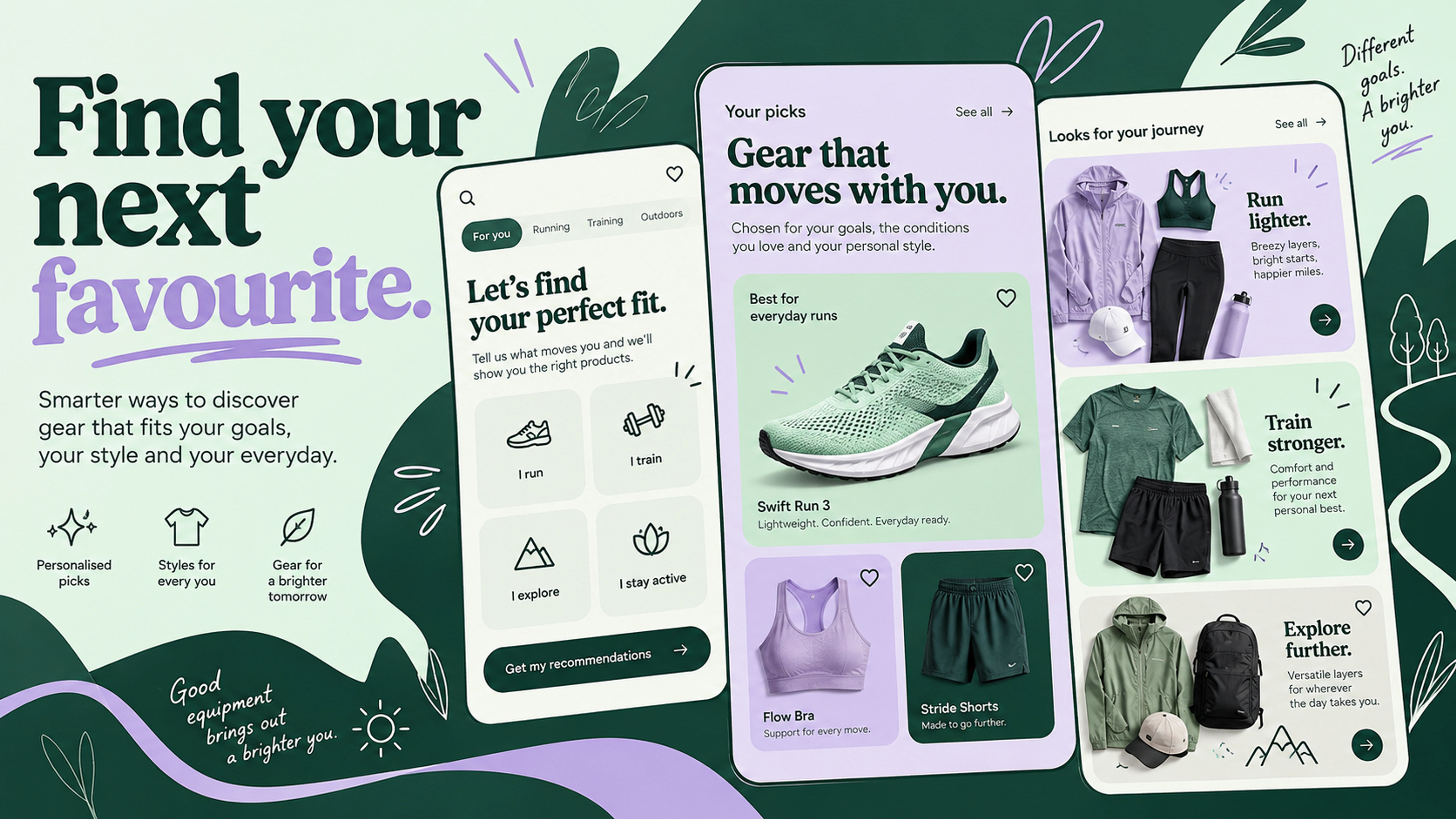
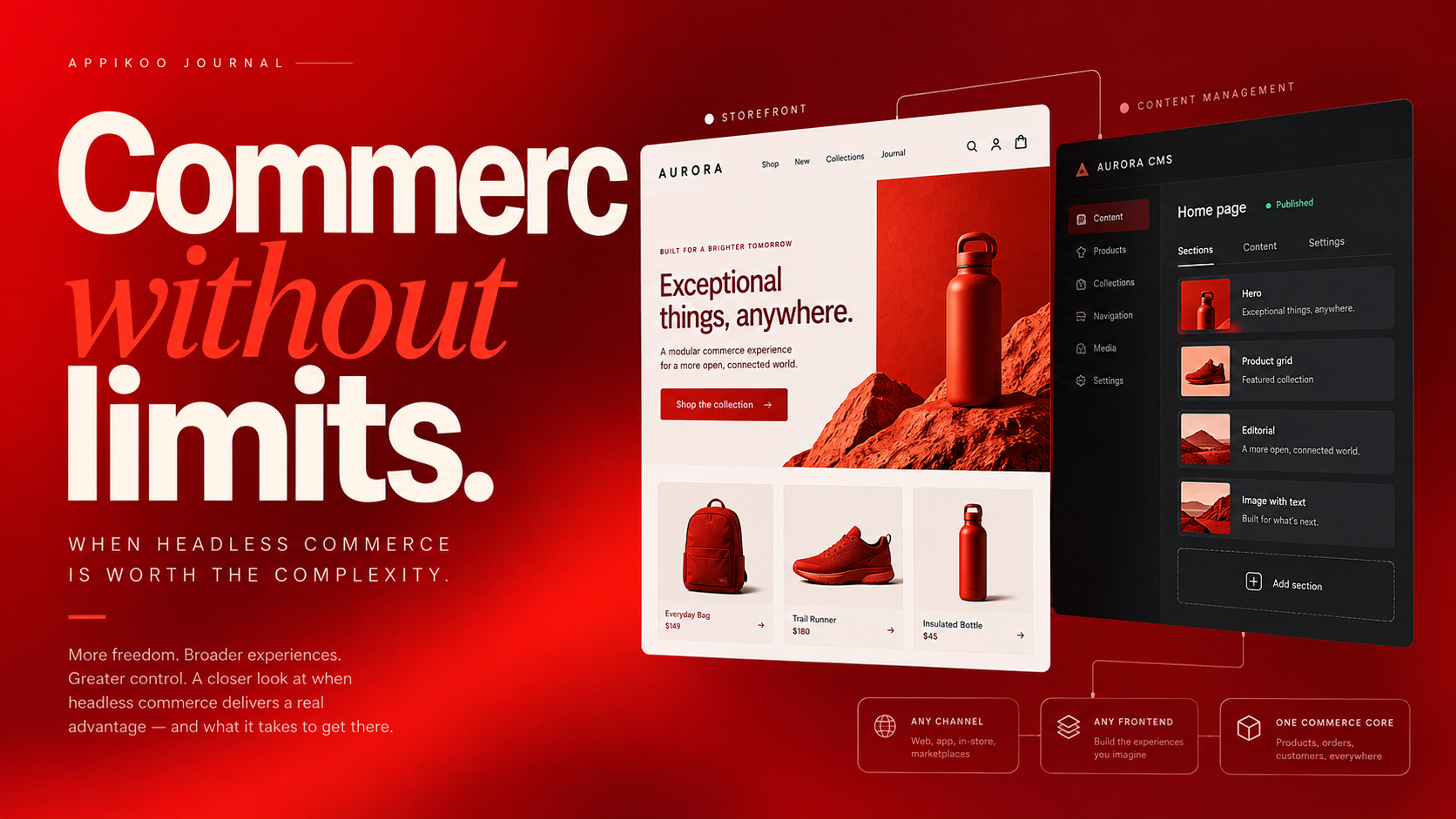
Separating the storefront from the commerce engine creates flexibility, but it also creates responsibilities. Choose headless architecture when a concrete requirement justifies the integration and maintenance work.
01.Describe the requirement that a standard storefront cannot meet
A headless setup lets the presentation layer communicate with commerce capabilities through APIs. This can support a distinctive interface or several channels sharing one backend. The decision should start with a specific limitation, not with the assumption that separation is inherently more premium.
Write down the journeys that require custom behavior and compare them with the platform’s existing capabilities. A well-configured standard storefront may cover the need with less work. Reserve custom architecture for differences that create value users or operators can actually recognize.
02.Count the responsibilities you take on
The team must coordinate catalog access, cart state, customer identity, checkout handover and content publishing. Preview environments and search behavior may also need their own integrations. Each boundary introduces a contract that must remain compatible as the connected systems evolve.
Include operational ownership in the estimate. Who investigates a stale price, a failed synchronization or a checkout mismatch? A more flexible frontend is useful only if the organization can support the additional integration surface after the original project team leaves.
03.Prototype the hardest boundary first
Build one realistic product-to-order flow before investing in a complete storefront. Include a variant, a promotion if relevant, an unavailable item and an interrupted session. This reveals whether the proposed architecture can preserve a coherent customer journey.
Compare editing as well as shopping. Marketing teams need to preview and publish without guessing how content will render. The strongest technical architecture can still be a poor choice if routine merchandising becomes slow or requires developer intervention.
04.Choose the simplest sustainable option
Document the expected benefit, recurring work and conditions that would justify the investment. Headless is a valid tool for particular constraints, not a universal maturity level. The right choice leaves the business with an experience it can improve and an operation it can maintain.