Live interfaces need explicit rules for connection loss, conflicting changes, and information that arrives late.
01.Define how fresh the data must be
A collaborative editor and a monthly reporting page have different needs. Before choosing a transport, ask how long information can remain unchanged without misleading someone. A clear refresh action or periodic request may be enough for a dashboard that supports occasional decisions.
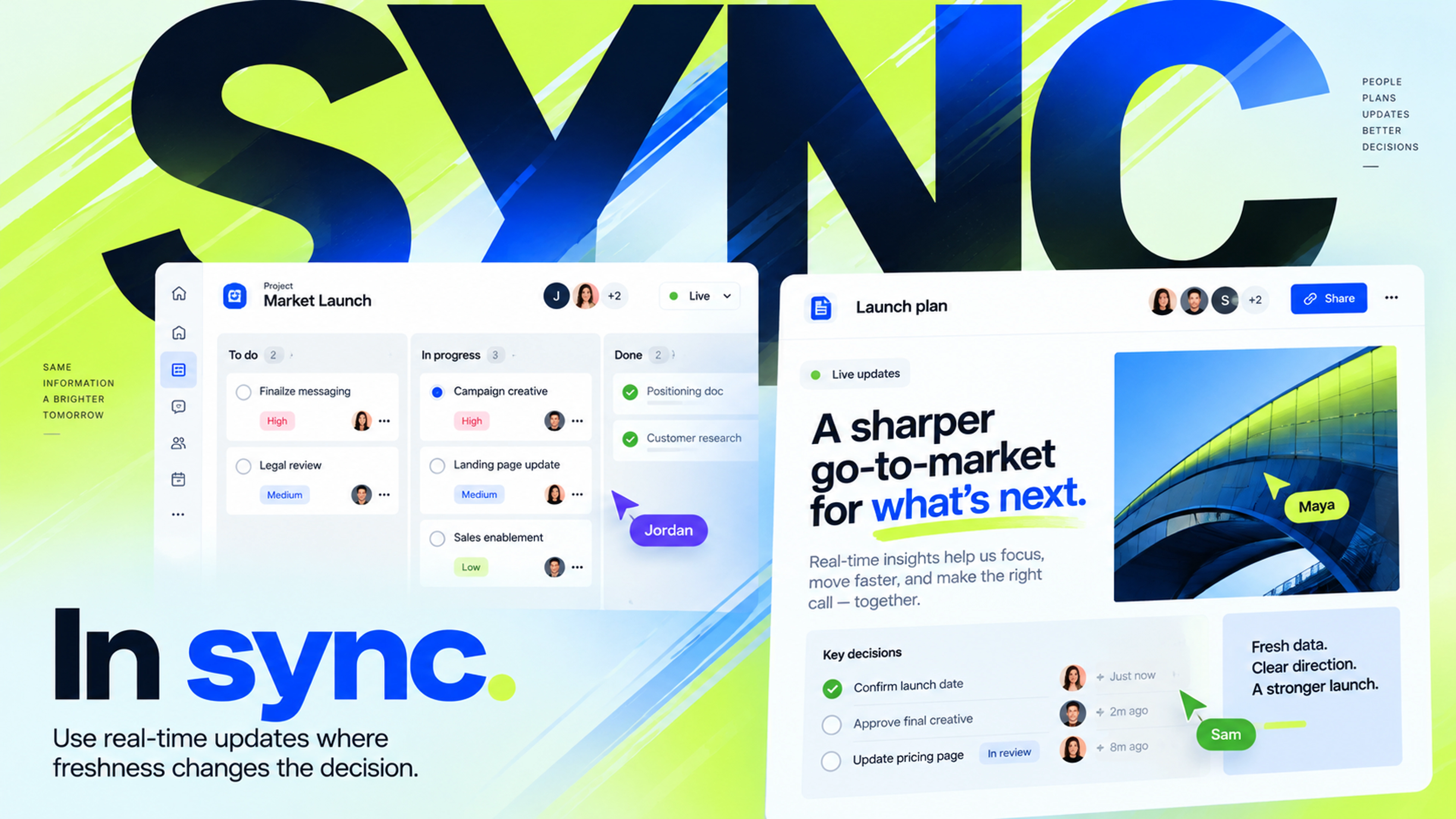
Use live delivery when another person's action should immediately change what the user can safely do. Assign a freshness requirement to that specific interaction rather than making every part of the product real time.
02.Choose a transport, then design the protocol
WebSockets support a persistent two-way connection, but that connection does not define your application's rules for ordering, acknowledgement, or replay. Give important events identifiers and associate updates with a record version when stale writes would be harmful.
MDN notes that the standard WebSocket API does not provide backpressure. Plan bounded queues, batching, or dropping replaceable presence updates so a busy connection cannot accumulate work indefinitely.
03.Make disconnection understandable
Show when displayed information may be out of date. On reconnection, reconcile with an authoritative snapshot or a supported event cursor instead of assuming every missed message can be recovered. Protect sensitive subscriptions with server-side authorization.
For concurrent editing, choose the conflict policy explicitly. Rejecting a stale update with a helpful comparison can be better than silently overwriting another person's work.
04.Measure delivery quality
Monitor reconnect frequency, event delay, queue growth, and failed reconciliation alongside server availability. Test a suspended browser tab and an unstable mobile connection. A live indicator earns trust only when the application explains what it knows, what it has confirmed, and what still needs to synchronize.