Reliable applications account for empty states, rejected actions, interrupted sessions, and the people who support the product.
01.Expand the definition of done
A feature is not complete when its ideal path works on a developer's machine. Define the expected behavior for missing data, expired access, duplicate submissions, and unavailable dependencies. These conditions are ordinary parts of use, not exceptional details to postpone until after launch.
Add those states to design reviews and acceptance criteria. A small, explicit list gives engineering and product teams a shared understanding of what they are shipping.
02.Protect the user's work
When a request fails, preserve recoverable input and explain what happened. Be precise about whether the action reached the server. Retrying an operation that may already have succeeded requires a server-side strategy that prevents unintended duplicate effects.
Use confirmations where the consequence merits them, especially for destructive or hard-to-reverse actions. Routine edits should remain efficient; an application full of generic warnings teaches people to dismiss them.
03.Give support something actionable
A generic error with no reference leaves both the customer and the support team guessing. Provide a safe request identifier and useful internal diagnostics without exposing secrets or unnecessary personal data. Make ownership of each operational alert explicit.
Distinguish a broken service from a user who needs clearer instructions. Both deserve attention, but they call for different fixes and should not be hidden inside one failure count.
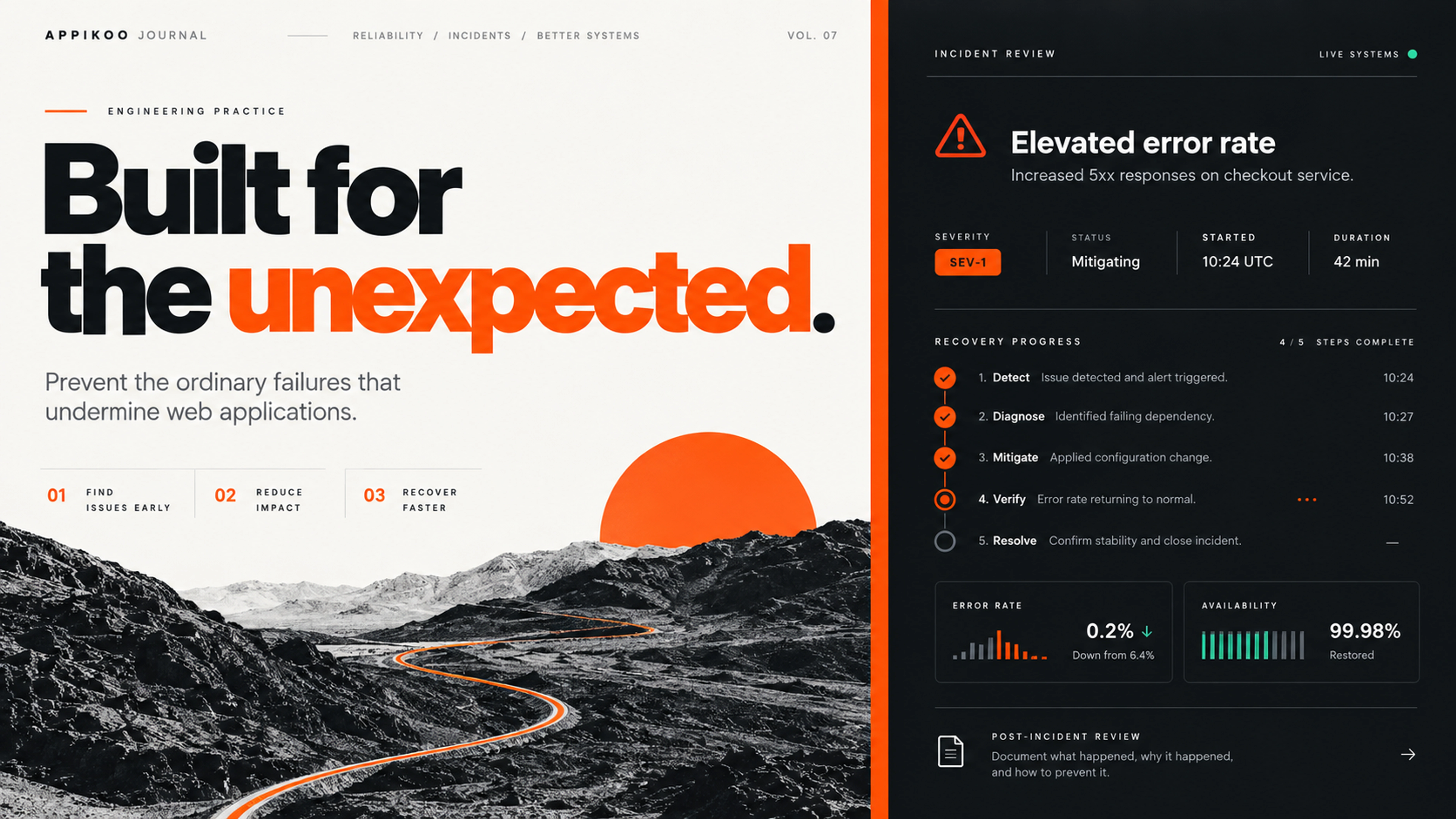
04.Release with a recovery plan
Before release, identify the affected workflow, how problems will be detected, and who can pause or reverse the change. Database migrations may need compatibility across versions rather than a simple code rollback. Practice one realistic failure scenario with the support team so recovery is an understood action, not an assumption.